Story by: Areej Altaf | Pictures by: Zulfiqar Khanzada
Situated in the heart of the bustling metropolis of Karachi, the final resting place of the Sufi saint Hazrat Abdullah Shah Ghazi is a place where people of all ethnicities and faiths turn up in flocks in the hopes of getting their unanswered prayers fulfilled.
According to the version of his lineage, traced by historian Suhail Zaheer Lari, he was a member of the Ahl al-Bayt. Born in 720 to Hazrat Syed Mohammed Nafs Zakkiyah in Medina, Hazrat Abdullah Shah Ghazi was brought up in Medina until 760 after which he had to travel with the first wave of Arab merchants to Sindh where he peacefully departed in 773.

-The lineage of Abdullah Shah Ghazi
The recently renovated shrine has a beige exterior, adorned with Sindhi tilework and blue kashi tiles. Inside the high square chamber, the tomb of Hazrat Abdullah Shah Ghazi stands on an elevated platform; however, the body of the deceased is kept in a crypt underground.


-The place where Abdullah Shah Ghazi is laid to rest
I had heard people talk about the pull that would draw them and countless others to the mazaar multiple times, but I had always been very skeptical of the claim. Looking at the hordes, as I entered the vicinity, had me overwhelmed. As I stepped in, there lay before me a spacious ‘Sehan’ (courtyard) to the left of which was the place where Abdullah Shah Ghazi was laid to rest along with his disciples.
The mazar is a special place for children, women, the elderly, and families that visit to pay their respects and get blessings.

-Women entering the courtyard with their children

-Family sitting in the courtyard

-Middle-aged woman assisting an elderly woman as they walk out of the courtyard
As devotees of all ages, colors, and ethnicities entered, they first paid homage to the Saint and then came down to the tombs of his peers.
The area of the tomb of the saint is a gender-segregated portion, with men on the right and women on the left.

-The flow of devotees at the mazaar. On one side they’re ascending towards the mazaar while on the other they descend

-Devotees putting chaddars and showering flowers on the tomb of the saint as an act of reverence

-A man taking away the chaddars. These will now be given to people who wish to take them home.

-A devotee praying by putting her hand on the tomb

-A devotee immersed in a deep heartfelt prayer

-A man sitting in the tashahhud position facing the tomb. The bowed head reflects his disconnection from all the noise around him and the serenity on his face shows how deep he is in his prayerful state

-A mother teaching her devotional practices to her child

-People tie threads to the wooden cradle for their mannats to be fulfilled
The devotees had a firm belief in everything in the mazaar. From the cloth the tomb was covered in, to the mithai that was offered, believing that having it would fulfill a sincere desire.
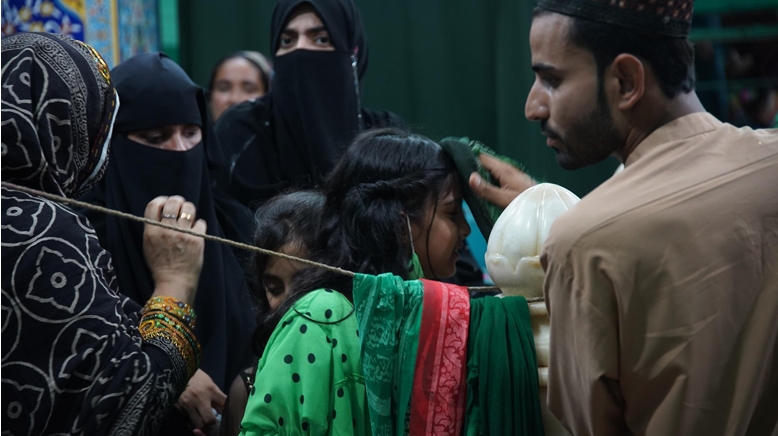
-A young girl getting her head patted with the cloth that covered the tomb
Welcoming individuals from diverse religious backgrounds, the mazaar serves as a beacon of interfaith harmony. Here the idea of culture, classes, and faith gets blurred out and everybody who enters is united by the purpose of seeking peace and spiritual enlightenment.
One of the devotees at the mazaar was Ramesh Kumar, a middle-aged man who is a regular visitor at the shrine of Hazrat Abdullah Shah Ghazi. Upon asking Ramesh what has made his belief so strong in the saint he recalled an incident where his wife had become mentally deranged and even after consulting multiple doctors, he could not find effective treatment, so upon insistence from his peers he with very little hope left, went to the shrine of Hazrat Abdullah Shah Ghazi to pray for his wife. Miraculously, his wife regained mental stability, and this strengthened his faith and conviction in the saint.
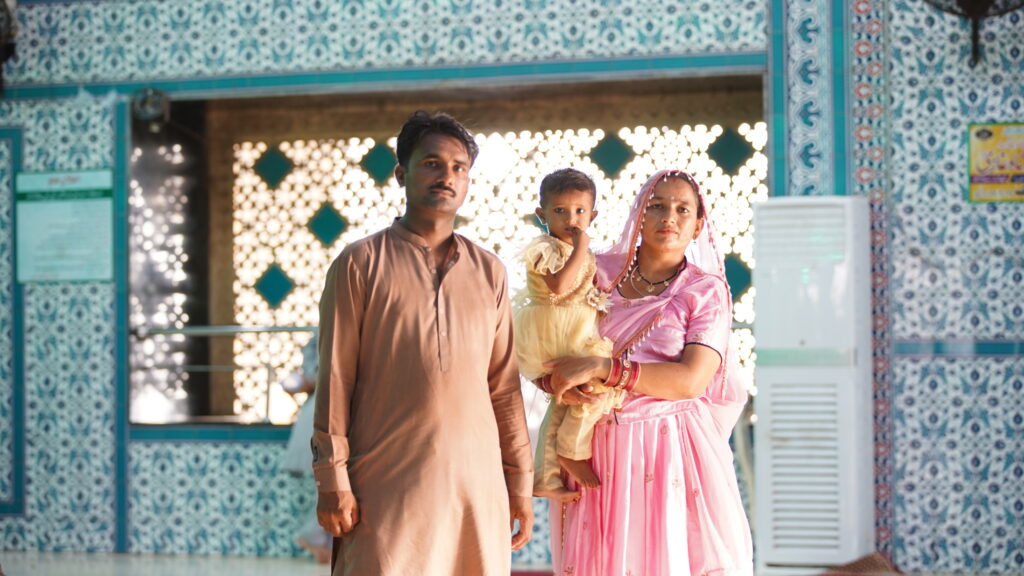
-Ramesh with his wife and daughter
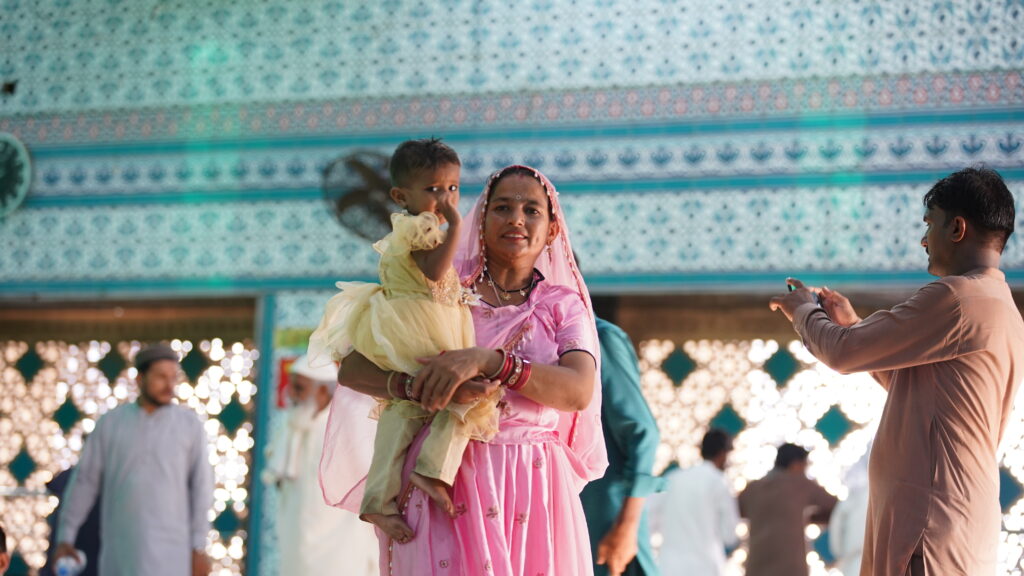
Newlywed couples often visit the shrine in hopes of getting blessings for a healthy and prosperous married life.
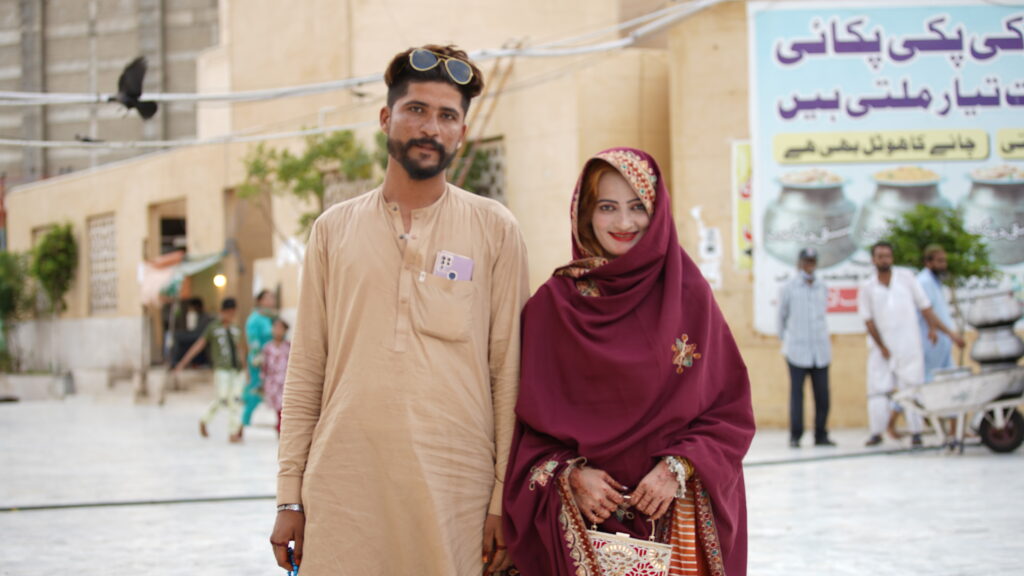
-The newlywed couple, Muhammad Adnan and his wife visiting the shrine to seek divine blessings for the new beginning
Throughout the mazaar at distances, there are multiple such boxes (as the one below) where donations can be made for ‘langar’ and other financial expenses.
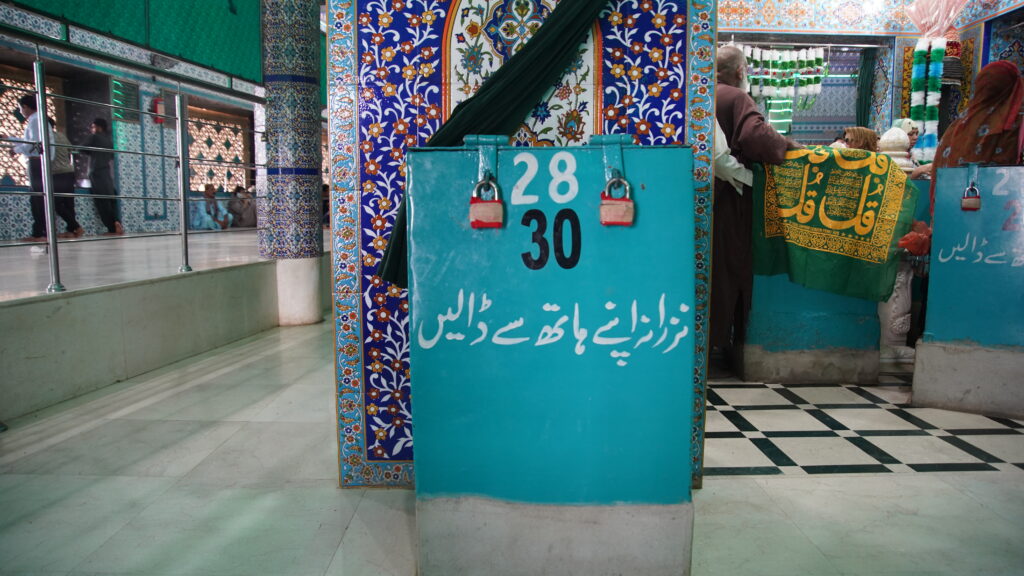
-The box where devotees can put in their donations
Langar is a communal kitchen that serves free food for everybody, from the workers at the mazaar to the visitors, regardless of their color, caste, creed, or religion. The distribution of langar among devotees starts at 10:30 am and ends at 11:30 pm. It was initiated by the then custodian of the shrine, Syed Nadir Ali Shah in the 1930s, and has continued ever since. Fresh food free of cost is provided thrice a day, seven days a week to hundreds and thousands of people and the menu remains unchanged, Chicken Biryani, Zarda, and Chana. As an act of generosity and gratitude, the people whose prayers get answered donate a daig of Biryani for it to be distributed among the devotees of Shah Sahab.
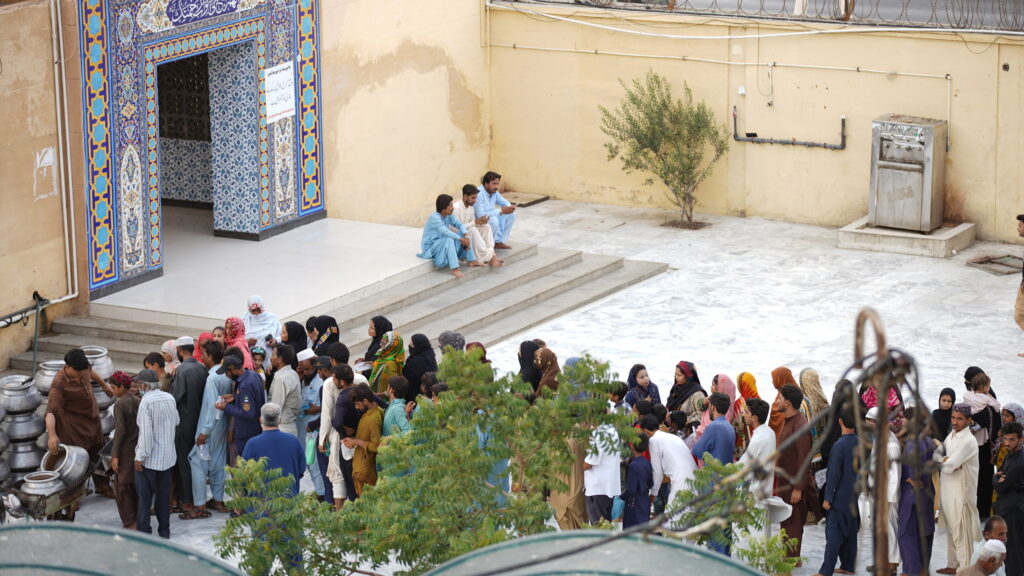
-People in the courtyard patiently waiting in line for their turns to get the food (langar)
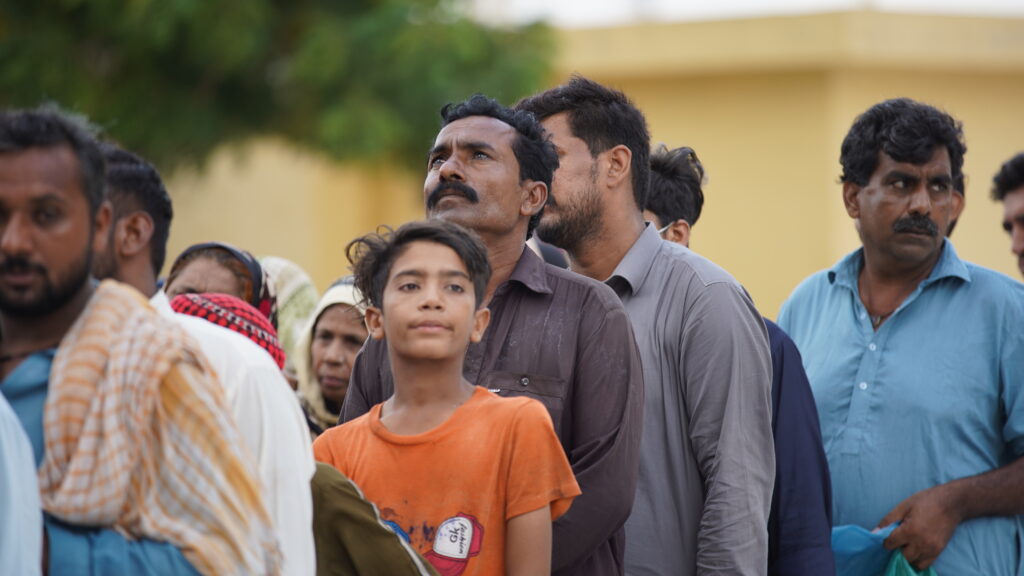
-People in the courtyard patiently waiting in line for their turns to get the food (langar)
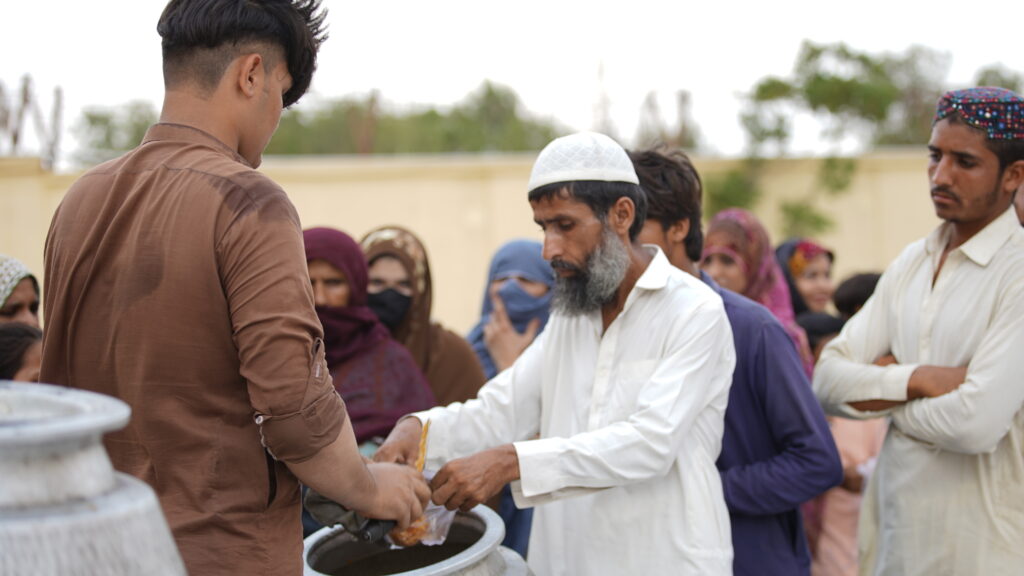
-Distribution of ‘langar’ (food) among devotees
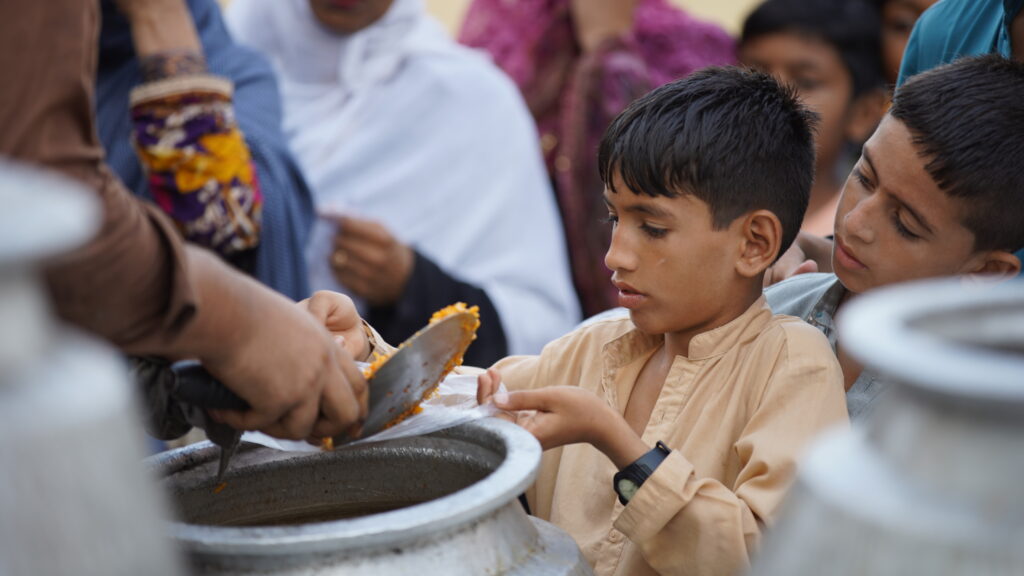
-Distribution of ‘langar’ (food) among devotees
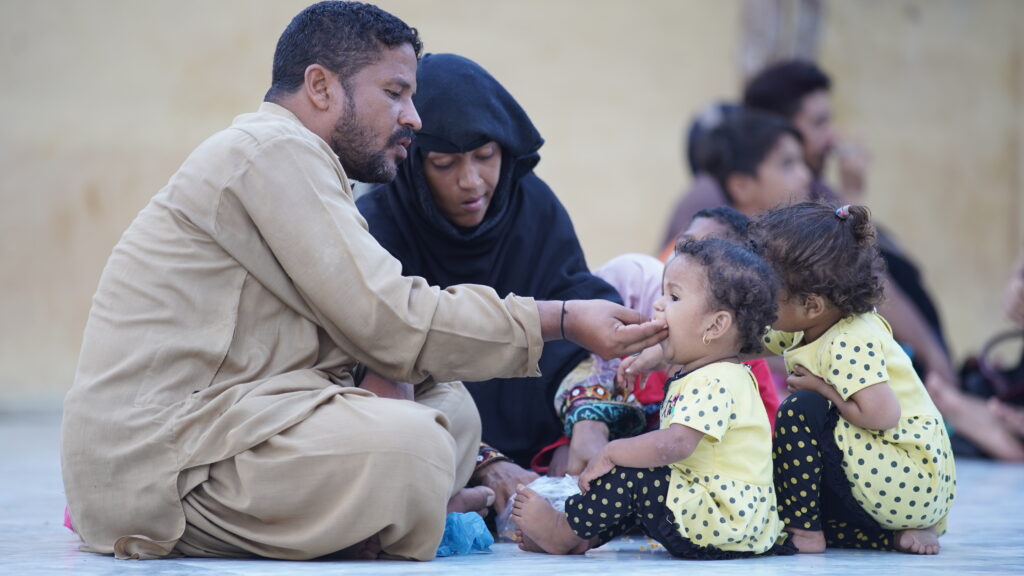
-Parents feeding their children in the courtyard at Abdullah Shah Ghazi Mazar
Further down the courtyard lies an alleyway lined with stalls selling souvenirs and jewelry, where visitors can relax with a cup of karak.
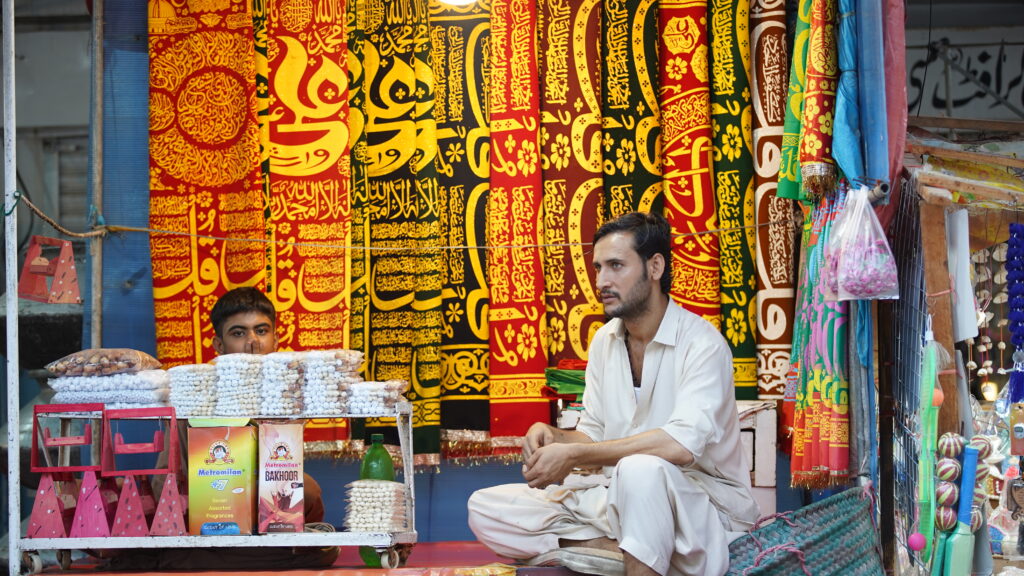
-A shop in the alley selling chaddars for the visitors to buy for the tomb
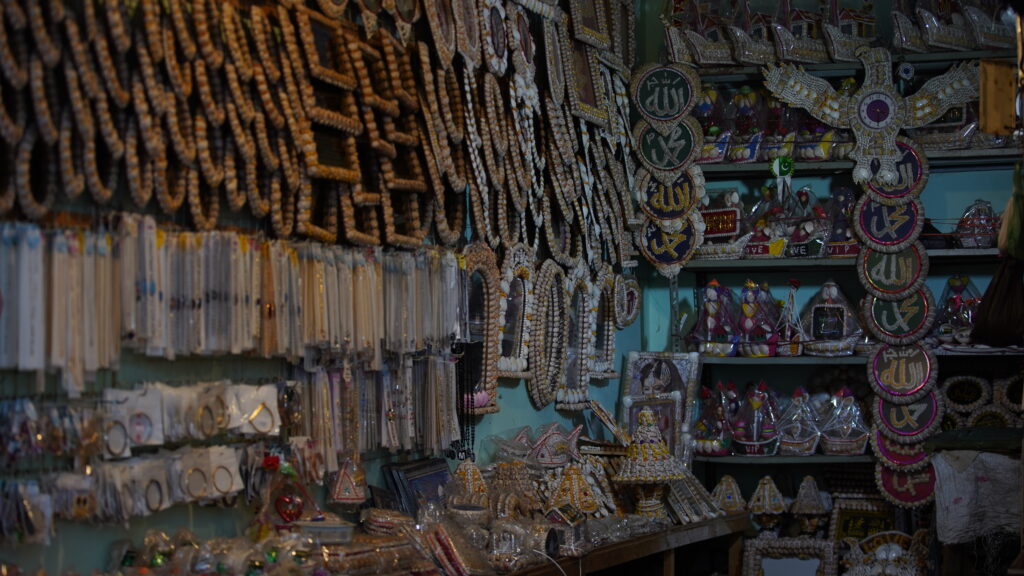
-Inside a shop selling souvenirs
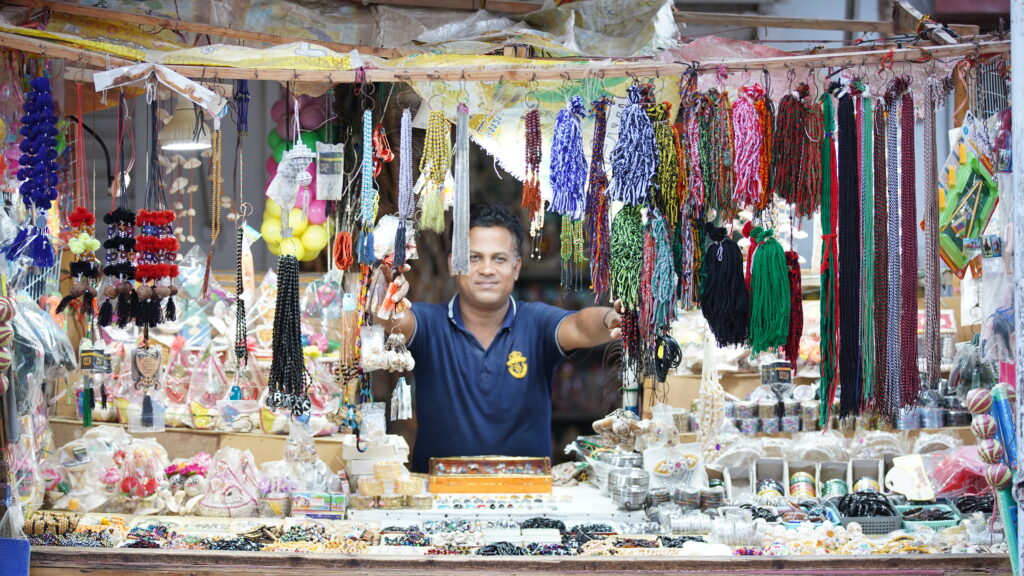
-Happy Mohammed Jawwad peeking through the accessories adorning his stall in the alley
As I turned back to the courtyard to visit the other part of the mazaar, I met Mohammed Shamsheer. One of the many Khadims at the mazaar, who has been serving as ‘Baba’s jhaaduu kash’ -as he likes to call himself- at the mazaar since 1975. His connection to the mazaar is profound as his father was a member of the highly regarded ‘Sabeel Bradri’ of Hazrat Abdullah Shah Ghazi. Shamsheer’s dedication to his duty is proof of the honor and privilege he feels to be serving the esteemed Sarkar.
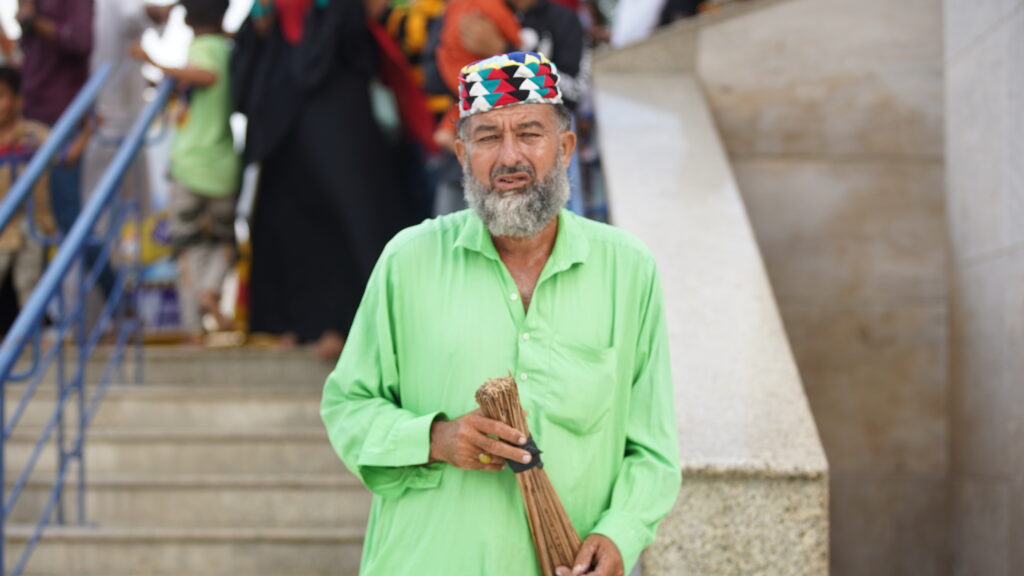
-Mohammed Shamsheer the cleaner
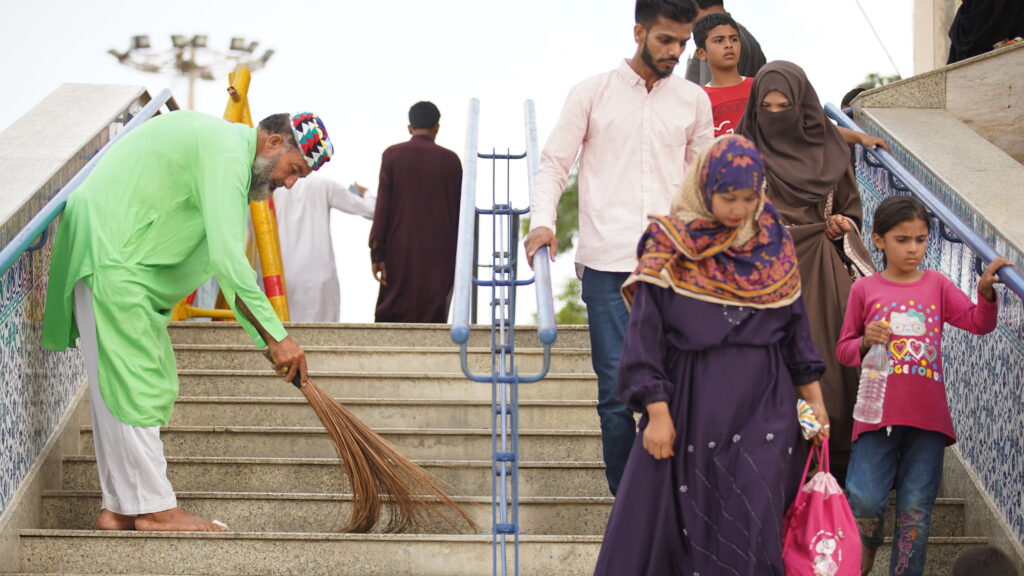
-Shamsheer diligently sweeping the staircase
On the other side of the courtyard, is a sacred space. This place holds both historical and spiritual significance for devoted visitors. Behind the ‘jaali’ (metal lattice screen) is a prayer mat placed on the spot where Hazrat Abdullah Shah Ghazi used to perform his prayers and this area is called ‘The Chilla Gah’. The jaali has threads, rings, and bangles tied to it, these represent the ‘mannats’ (prayers) made by the devotees, in the hopes of divine blessings.
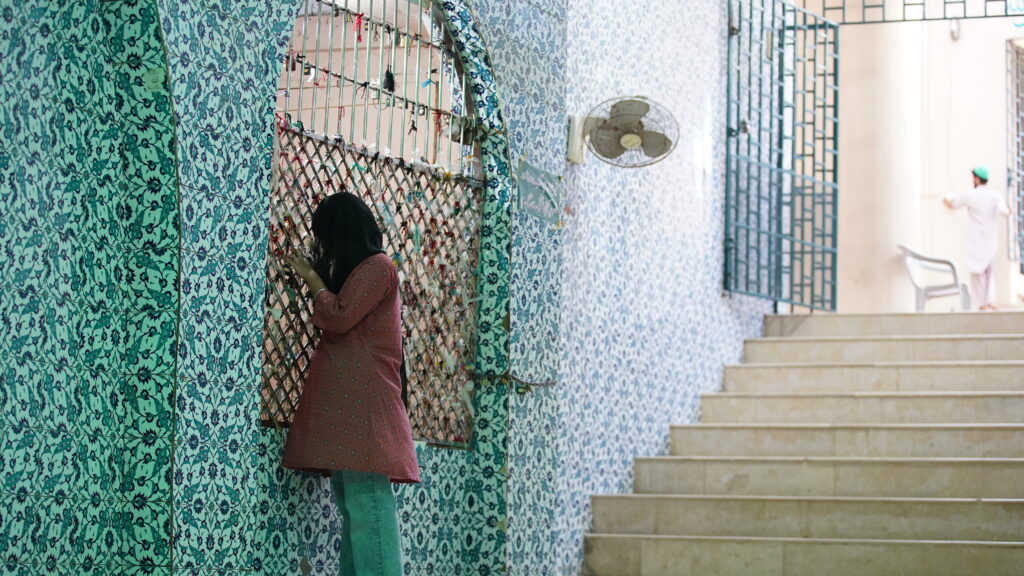
-A girl peeking through the jaali
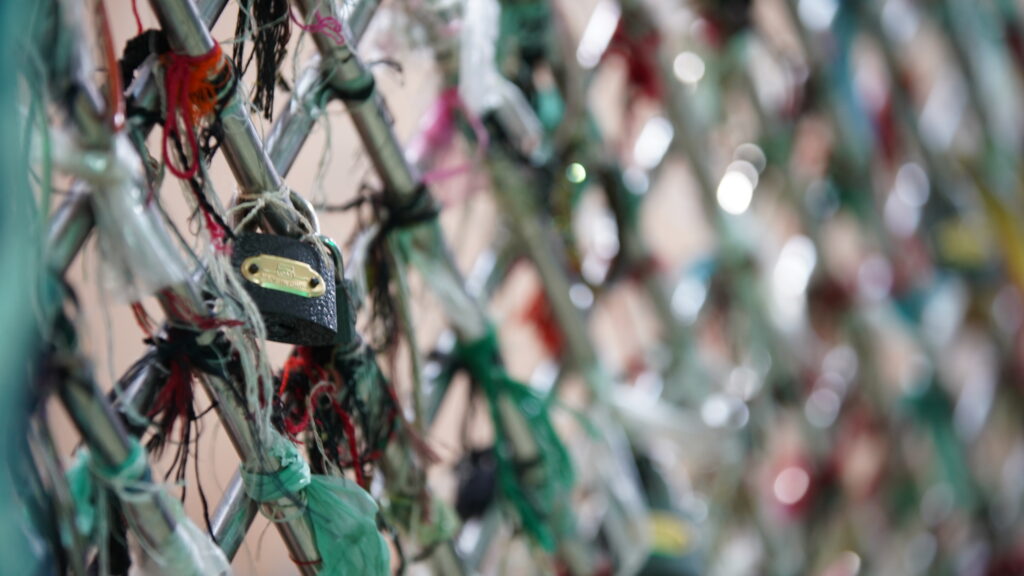
-Threads and locks of mannat
Right in front of this keepsake of the Saint is another jaali behind which is the ‘Chashma’ (fountain) which, according to the caretaker of this part Naseeb Gul, was a result of the prayers made by the ‘Mureeds’ (disciples) of the saint. Despite numerous people drinking the water from the chashma, the chashma continues to flow abundantly. It is also said that this water can cure illnesses.
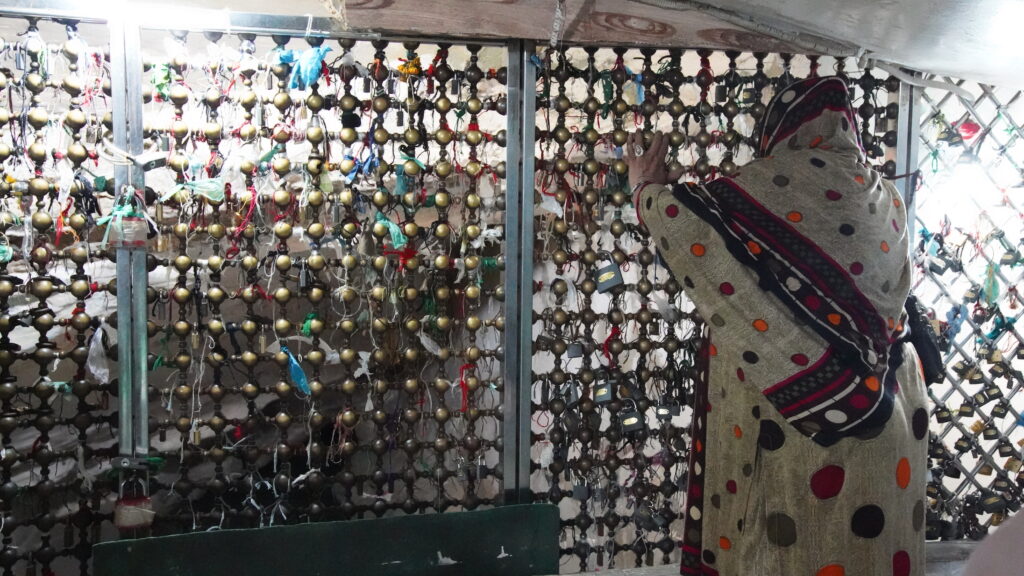
-Woman looking through the jaali at the chashma
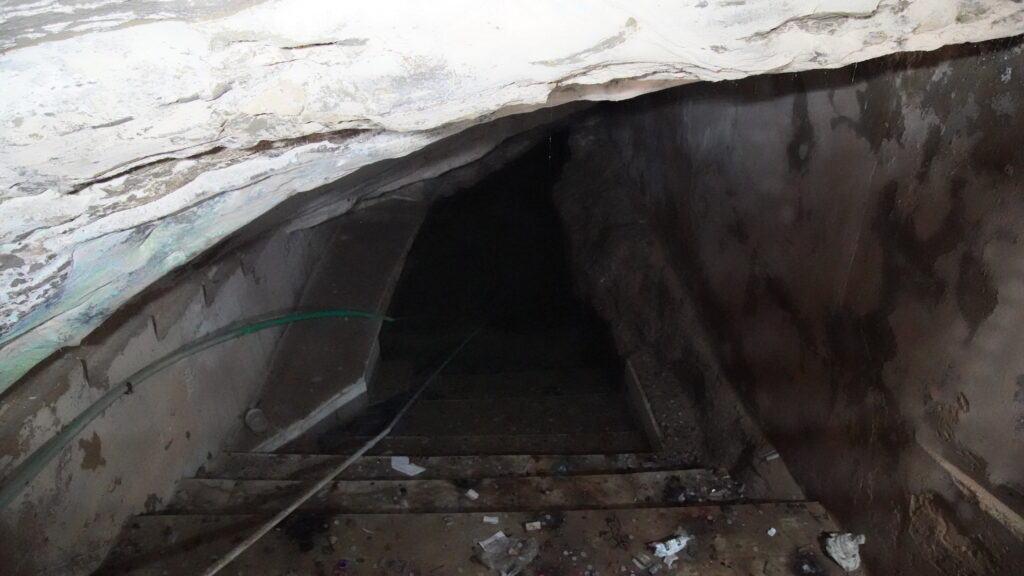
-The Chashma
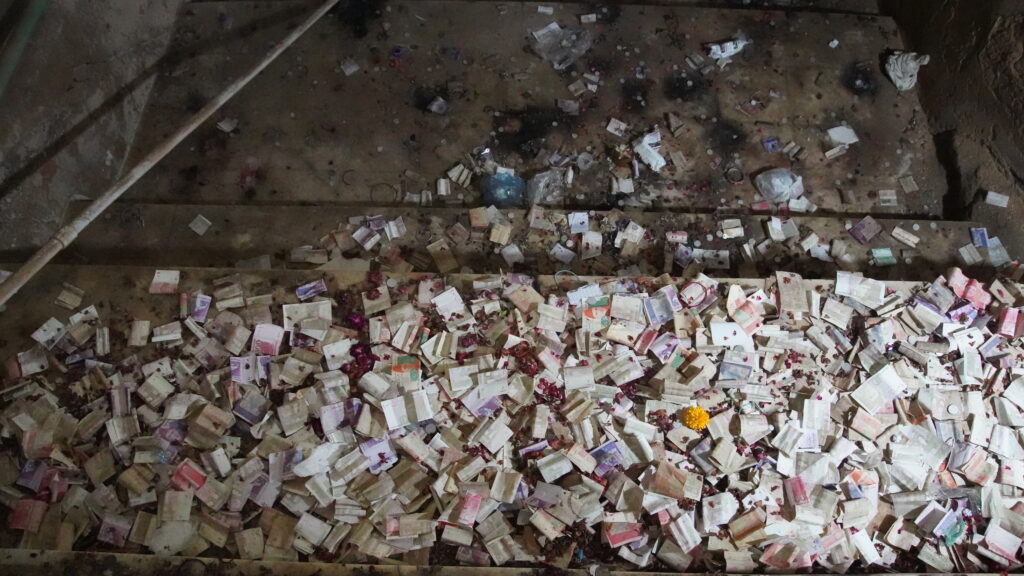
-People have thrown in money for the fulfillment of their prayers
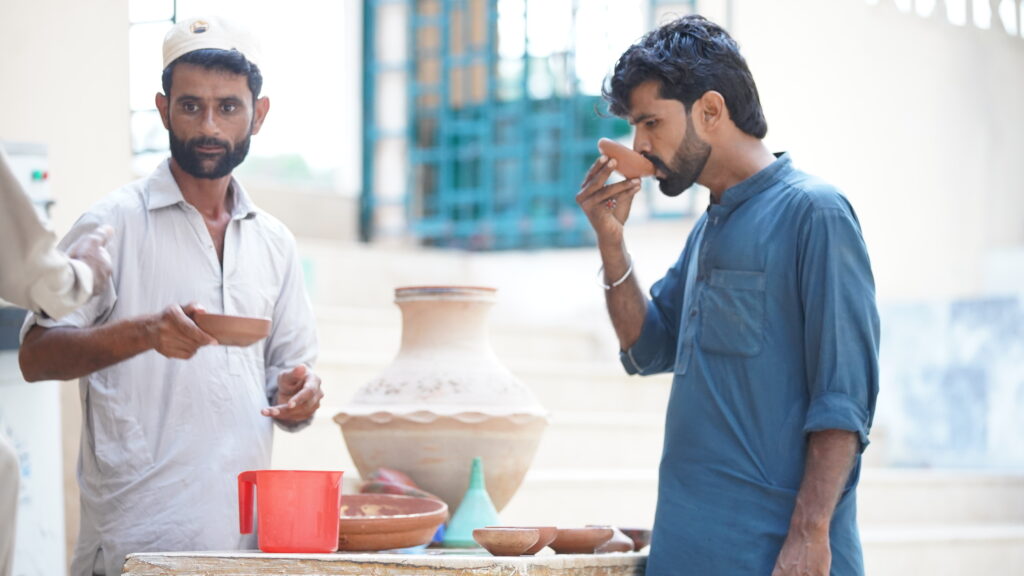
-Naseeb Gul serving water from the Chashma to the visitors
This part of the mazaar also houses the final resting places of some of the notable personalities of the country.
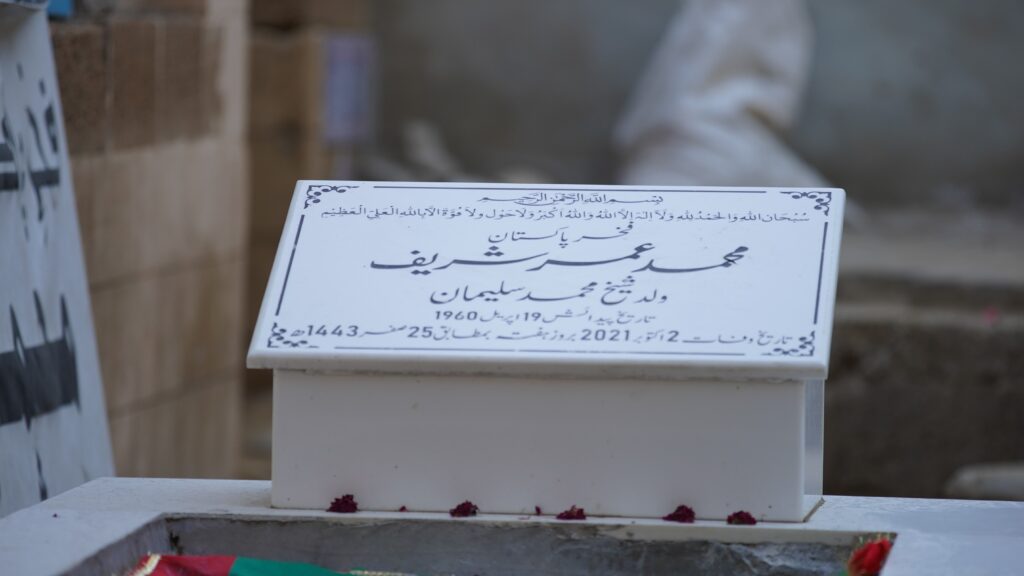
-Grave of the Comedian, Director, and Actor Muhammad Umer Sharif who died due to a heart attack in 2021
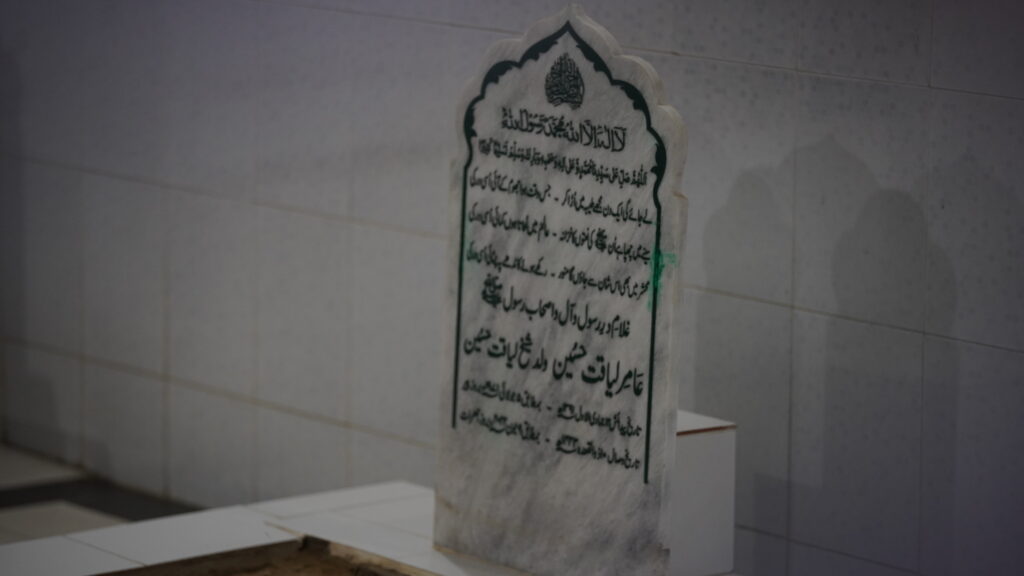
-Grave of Amir Liaquat Hussain, politician, columnist and television host
The mazaar is truly a fascination. It is not only a place of worship but also stands as a beacon of hope, and interfaith harmony and holds cultural and mystical significance. The devotees harbor an unwavering belief and faith in the Saint, as their wishes and aspirations continue to be fulfilled. It warmly welcomes devotees from diverse creeds, cultures, and status quo. People visit with the hope of receiving blessings and expressing gratitude to the revered saint by offering chadars upon the tomb, distributing sweets, and adorning the tomb with flowers. It is a place where one can witness a range of emotions from anticipation to reverence, devotion, and fulfillment and it is with these emotions that the true spirit of the Ghazi Mazaar is discovered.